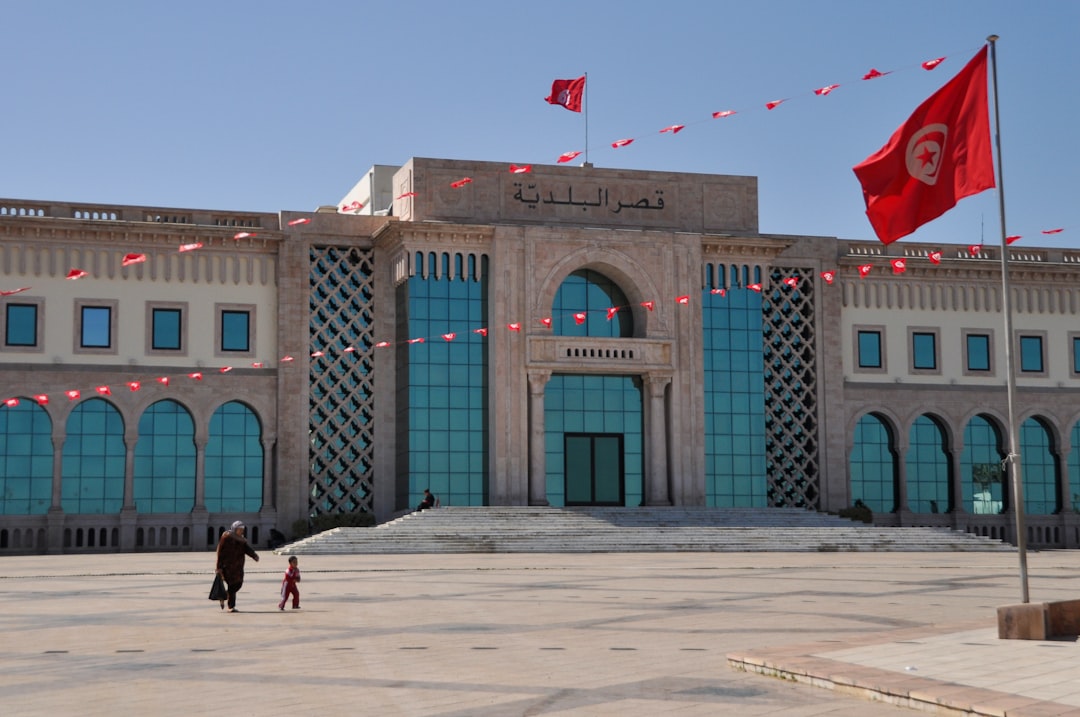
The Agence Foncière de la Ville de Tunis has begun a targeted review of duplicate property images embedded in the city's digital cadastral database, a technical correction that carries direct consequences for thousands of homeowners, tenants, and small business owners across the capital. The programme, which municipal officials confirmed is running through the third quarter of 2026, focuses on eliminating redundant scanned records that have caused mismatches between physical plot boundaries and their official digital representations.
The timing is not arbitrary. Tunis has accelerated its urban digitalisation drive since 2024, when the municipality committed to processing all land transaction requests through its online Guichet Numérique portal. Duplicate image files — the product of successive scanning rounds carried out between 2018 and 2023 — have created technical conflicts in roughly one in twelve registered plots according to internal estimates circulating among licensed notaries in the city. Those conflicts have frozen permit approvals and complicated property sales at a moment when demand for renovated housing stock in older medina districts is rising sharply.
Where the Problem Is Biting Hardest
The districts feeling the sharpest effects are those where property ownership is most fragmented and documentation oldest. In the Médina, where narrow lots along Rue de la Kasbah and Rue Sidi Ben Arous are often subdivided among multiple heirs, a single duplicated cadastral image can render an entire inheritance settlement legally incomplete. Notaries working out of the Quartier Lafayette have reported routine delays of four to six months on transactions that should close in under sixty days, largely because the property registry throws an error flag when conflicting image records exist for the same parcel.
The Bab El Khadra neighbourhood presents a different but related problem. Several mid-rise residential buildings undergoing structural renovation under the Agence de Réhabilitation et de Rénovation Urbaine programme have hit administrative walls because contractors cannot obtain final building permits while the underlying plot records remain flagged. One project on Avenue de Carthage has been waiting since February 2026 for clearance that depends on a registry reconciliation the agence has not yet completed.
For ordinary residents, the practical cost is measurable. Property lawyers in Tunis charge between 800 and 1,500 dinars for litigation related to cadastral disputes — a figure that rises steeply if the case requires expert surveyor testimony before the Tribunal Immobilier. Families in the Médina who cannot afford those fees often simply abandon sales or sit on undivided inheritance for years. The municipal review, if it runs efficiently, could eliminate the administrative root cause before those disputes escalate.
What the Fix Actually Involves
The correction process works in two stages. First, a technical team at the Direction des Affaires Foncières runs an automated comparison script across the database to flag parcels with more than one image record attached to the same reference number. Second, a human reviewer — typically a licensed geometrician — validates which image corresponds to the most recent physical survey and marks the others for archival rather than deletion, preserving the document history.
That distinction matters legally. Tunisian property law requires that all historical cadastral documents be retained, which means the municipality cannot simply delete duplicate files. Archiving them correctly, rather than leaving them active in the system, removes the conflict flag without destroying the evidentiary chain. The municipality has assigned twelve full-time geometricians to the project, working across three rotating shifts at the main registry office near Place du Gouvernement.
Residents with pending property transactions, inheritance cases, or renovation permit applications should contact the Agence Foncière directly to check whether their parcel reference number appears on the reconciliation queue. The agency's public counter at Rue Charles de Gaulle operates Monday through Friday, 08h30 to 15h00, and staff can confirm within minutes whether a given plot is affected. Those whose cases are flagged will be notified by registered post and given a thirty-day window to submit any supplementary survey documents before the review is finalised. Missing that window pushes a case to the next processing round, which is currently scheduled to begin in October 2026.