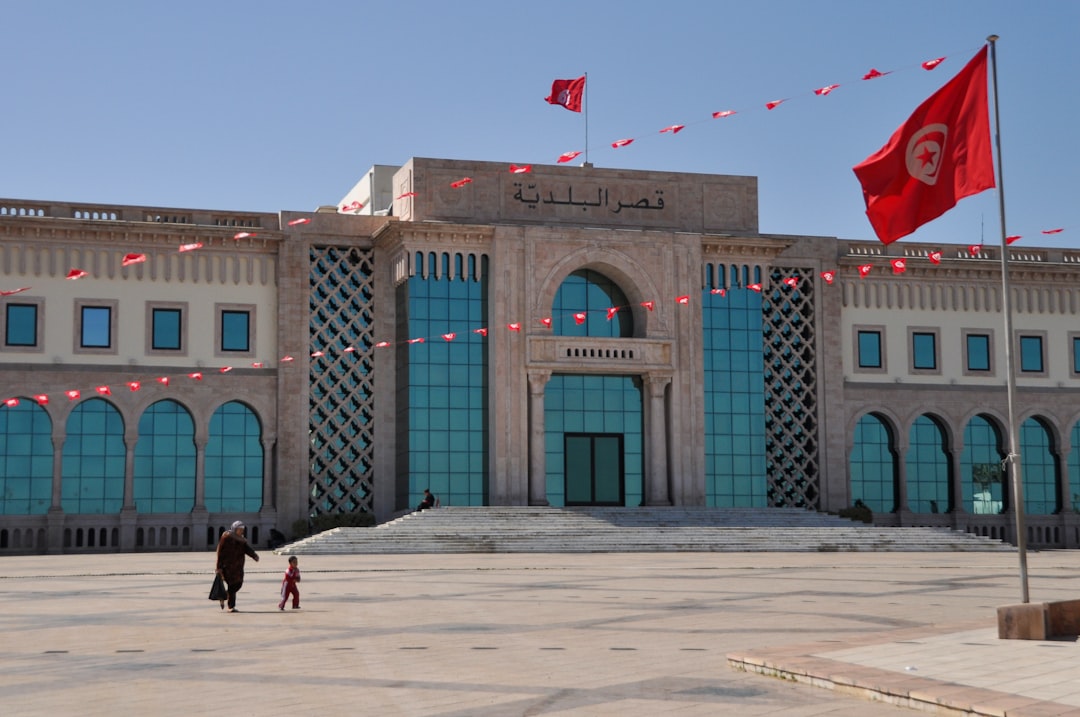
A debate that has been simmering inside Tunis's planning bureaux and architecture faculties for years has finally broken into the open. City officials and heritage specialists are calling on the municipality to retire the stock imagery, generic graphics and duplicated visual representations that have long defined how Tunis presents itself, in public campaigns, urban signage, development permits and promotional materials, and replace them with documentation that actually reflects how the city looks today.
The timing is not arbitrary. The Municipalité de Tunis is currently revising its Strategic Urban Development Plan, a document last substantially updated in 2016, and several civic organisations have seized on the revision process to argue that duplicated, outdated images embedded in planning files and public-facing materials are causing tangible administrative confusion and misrepresenting neighbourhoods that have changed substantially.
Why It Matters Now
The problem is most visible in two specific contexts. First, construction and renovation permit applications filed through the municipality's digital portal, launched in its current form in March 2023, regularly include reference photographs pulled from earlier dossiers or from generic Tunisian cityscape libraries. Inspectors at the Direction Générale de l'Urbanisme have flagged cases where submitted site images matched photographs used in applications for properties several streets away, making on-site verification harder to complete efficiently.
Second, the Agence de Réhabilitation et de Rénovation Urbaine, known as ARRU, which oversees regeneration programmes in working-class districts including Ettadhamen and the lower reaches of Bab El Khadra, has been pushing partner contractors to submit original photographic surveys rather than reusing images from previous project cycles. ARRU officials have described the practice in internal communications as a documentation risk, though no formal policy change has been published as of this writing.
Urban architect Riadh Bahri, who lectures at the École Nationale d'Architecture et d'Urbanisme on Rue de Rome, has written publicly about the broader dimension of the issue. His position, laid out in a piece published in the Revue Tunisienne d'Urbanisme earlier this year, is that duplicate imagery in planning and civic materials is not merely a bureaucratic nuisance. It shapes how decisions get made. When officials review a permit or approve a streetscape design based on a photograph that no longer matches the site, the gap between the image and reality feeds into policy choices that miss what is actually there.
What the Data Suggests
A survey of permit applications submitted to the Municipalité de Tunis between January and April 2026, figures circulated at a closed workshop held at the Centre Culturel International de Hammamet in May, found that roughly one in five dossiers contained at least one image flagged as potentially duplicated from a prior submission. The workshop, which brought together urban planners, notaries and municipal inspectors, did not produce binding recommendations, but participants agreed that the figure was high enough to warrant a formal review process before the Strategic Urban Development Plan is finalised.
The Médina of Tunis, a UNESCO World Heritage site, presents a particular challenge. Its narrow streets, among them Rue Sidi Ben Arous and the passages around Souk El Attarine, are photographed constantly, and the same angles recur across decades of documentation. Heritage preservation files held by the Institut National du Patrimoine contain, by the institute's own published admission in its 2024 annual report, multiple instances of imagery appearing in more than one property record.
For residents in newer peri-urban zones such as La Soukra and Ariana Ville, the stakes are more prosaic but equally real. Development applications in those communes, which are processed partly through the municipality and partly through the Gouvernorat de l'Ariana, have been delayed when inspectors could not confirm that submitted photographs matched current site conditions rather than images from earlier approved schemes nearby.
Civic groups including the Association des Architectes Tunisiens have called for the digital permit portal to be upgraded with metadata validation tools that can detect duplicate image files before a dossier is accepted for review. The municipality has not publicly committed to a timeline, but the Strategic Urban Development Plan revision is expected to reach its public consultation phase before the end of 2026, giving advocates a clear window to press for the change.