Wellness
Walking Meditation: How to Turn Your Daily Walk Into Mindfulness
Tunis's tree-lined avenues and medina lanes are some of the best meditation studios you'll never pay for — you just have to know how to use them.
4 min read
Wellness
Tunis's tree-lined avenues and medina lanes are some of the best meditation studios you'll never pay for — you just have to know how to use them.
4 min read
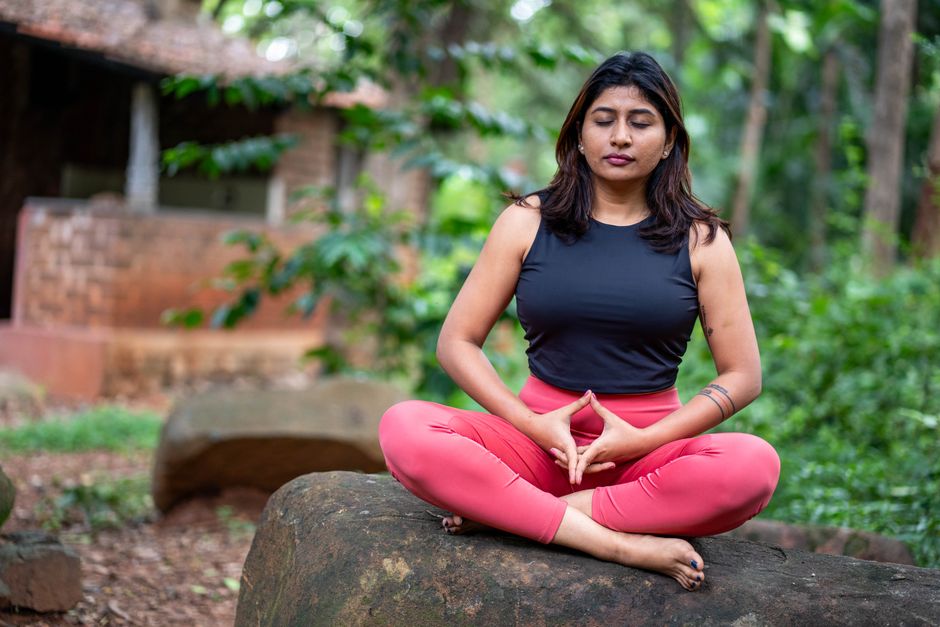
Most people in Tunis already walk more than they realise. The commute from the Lac II business district, the Saturday morning loop through Parc du Belvédère, the detour through the medina's Rue Sidi Ben Arous to grab coffee before work. What few of them know is that any of those routes, walked with deliberate attention, qualifies as one of the oldest contemplative practices on record — walking meditation, called kinhin in Zen tradition and referenced in Sufi ritual movement centuries before that term existed in the West.
Interest in the practice has accelerated sharply this year. According to the Global Wellness Institute's 2025 annual report, mindfulness-related activities grew into a $65 billion market globally, with movement-based meditation — yoga, walking, conscious hiking — accounting for nearly 30 percent of that figure. The data tracks a real shift in how people are choosing to manage stress: away from desk-based apps and toward the body in motion.
Tunis is not exempt from that pressure. Commuting times across the Grand Tunis area have lengthened since the extension of the light rail network began disrupting surface traffic on Avenue Habib Bourguiba and Avenue de la Liberté. Therapists at the Centre de Santé Mentale de Tunis, on Rue de Hollande in the city centre, have reported rising caseloads tied to workplace anxiety since 2024. Walking meditation doesn't replace clinical care — anyone dealing with serious anxiety or depression should consult a medical professional — but it is increasingly being discussed as a daily maintenance tool that costs nothing.
The distinction matters. Walking meditation is not exercise, not sightseeing, and not the distracted autopilot march most of us do while scrolling a phone. The method is simple: slow down by roughly a third of your normal pace, drop your gaze to about two metres ahead, and anchor your attention to the physical sensation of each foot making contact with the ground. Heel, arch, toe. Left, right. That's the anchor point — the equivalent of the breath in seated meditation.
Practitioners are advised to pick a fixed route of 15 to 20 minutes and use the same path repeatedly until the visual environment stops competing for attention. In practical terms for Tunis, that means somewhere familiar rather than somewhere beautiful. The northern path of Parc du Belvédère's perimeter, roughly 1.4 kilometres, works well for this: enough shade from the stone pines in summer, consistent underfoot surface, and a circuit that brings you back to the same gate. The medina, by contrast, demands too much navigational attention on a first attempt — save it for when the practice is established.
The Association Tunisienne de Pleine Conscience, which runs structured eight-week mindfulness-based stress reduction programmes in French and Arabic out of a centre in the Mutuelleville neighbourhood, introduced a dedicated walking meditation module in January 2026. Sessions cost 40 dinars per week and include guided outdoor practice in the surrounding residential streets. Participants report that the neighbourhood setting — familiar, unglamorous, not curated for tourism — is precisely what makes it work.
July is the hardest month to start. Daytime temperatures in Tunis regularly exceed 35°C through July and into August, which makes morning the only practical window. Between 6:15 and 7:30 a.m., the Corniche at La Marsa is cool enough and quiet enough to walk at meditation pace without fighting either the sun or the crowds. By 8 a.m., both become obstacles.
The practical sequence for beginners: five minutes of normal walking to settle the body, followed by 15 minutes of the slowed, sensation-focused pace, then five minutes back to normal. No headphones. No podcasts. Phone on silent and in a pocket. The practice is accumulative — neuroscience research published in the journal Mindfulness in 2024 found that eight weeks of daily 20-minute sessions produced measurable reductions in cortisol levels comparable to seated meditation practice. The walking version carries one additional advantage: it integrates into a commute rather than requiring separate time carved from a day.
Start tomorrow. Pick one route. Walk it slower than feels natural. The medina will still be there for advanced practice in September.
Wellness
Wellness

Wellness

Wellness
About this article
Published by The Daily Tunis
Spread the word
Daily brief
Free, in your inbox before 7am. Weekdays.
The Daily Network — local news across Australia