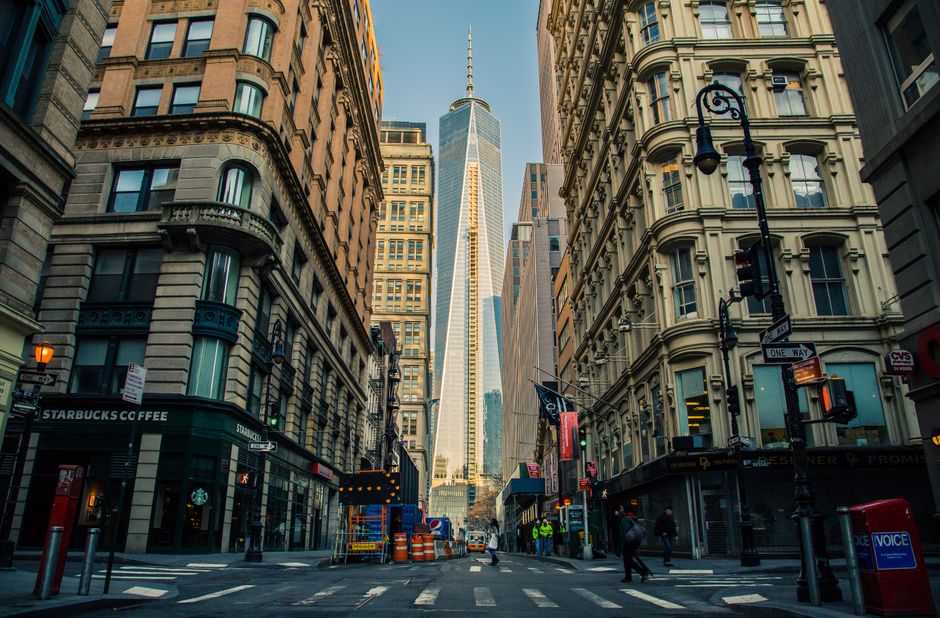
Walk into the Municipalité de Tunis on Avenue Habib Bourguiba and ask to see the digital asset catalogue for the city's urban development portal. What you will find, according to public procurement documents filed between 2019 and 2024, is a database where hundreds of locations — from the medina's Bab el-Bhar gate to the residential blocks of Lac 2 — are illustrated by the same stock photographs, some appearing thirty or forty times under different district headings. The duplication is not accidental. It is the predictable result of how the city's digital infrastructure was built, layer by layer, by competing vendors with no shared standard.
The problem matters now because Tunis is in the middle of its most ambitious urban communications overhaul in two decades. The Grand Tunis Development Agency, which coordinates planning across the capital and its surrounding governorates, launched a digital transparency initiative in January 2025 requiring every neighbourhood profile, zoning document, and public consultation dossier to carry verified, location-specific imagery. The deadline for compliance across all 21 municipal districts was set for the end of June 2026. That deadline has passed. The duplicate image problem is the central reason why.
A Patchwork Built Over Three Procurement Cycles
The roots of the crisis run back to 2014, when the Agence de Promotion de l'Industrie et de l'Innovation co-funded the first wave of municipal digitisation grants following Tunisia's post-revolution administrative reforms. Three separate vendors won contracts to photograph and catalogue different city zones. They used different metadata schemas, different file-naming conventions, and — critically — different definitions of what counted as a "unique" image. When the systems were merged into a single municipal portal in 2018, automated deduplication tools were never applied. A second procurement round in 2021, awarded to a Tunis-based IT firm under a contract valued at roughly 800,000 dinars, added more photography without auditing what already existed.
The result is what urban data specialists call cascading redundancy. The Belvedere Park appears under at least six different district tags in the current system. The clock tower at Place de la République — one of the most photographed spots in the city — shows up in documentation for neighbourhoods it does not adjoin, including files nominally covering El Menzah and La Marsa. Community boards in the working-class district of Ettadhamen have submitted formal complaints noting that their neighbourhood's online profile is illustrated entirely by images of upscale lakeside developments several kilometres away.
What Went Wrong at the Archive Level
The Bibliothèque Nationale de Tunisie, which maintains a parallel urban photographic archive on Rue du Pasha in the medina, flagged the duplication issue in a 2023 internal review. The review, which was later referenced in a parliamentary committee session on digital governance, estimated that roughly 60 percent of images in the active municipal portal could not be traced to a verified geographic coordinate. Without that coordinate, replacing a duplicate with a genuine location-specific photograph is a manual, time-consuming task.
Municipal technicians have been working since February 2026 on a remediation protocol that involves cross-referencing the portal's image library against satellite mapping data and field photography commissioned specifically for the audit. The work is being conducted district by district, starting with the densely documented medina zone and moving outward toward peripheral communes like Sidi Hassine and Sidi El Béchir. Progress has been slower than planned partly because the original vendor contracts from 2014 and 2021 contained no provisions requiring vendors to hand over raw geotagged originals — only processed files stripped of location metadata.
For residents and civil society organisations that rely on the portal to participate in planning consultations, the practical advice for now is straightforward: treat any neighbourhood image on the current municipal platform as illustrative rather than definitive, and cross-check against the Institut National de la Statistique's publicly available urban mapping resources, which carry independent geographic verification. The municipality has said it expects the medina and northern districts to carry fully verified imagery by the end of September 2026, with the remaining districts to follow before the year is out. Whether the internal capacity exists to meet that timetable is the question that city hall has not yet answered publicly.